Coupled Human-Water Systems in Large River Basins
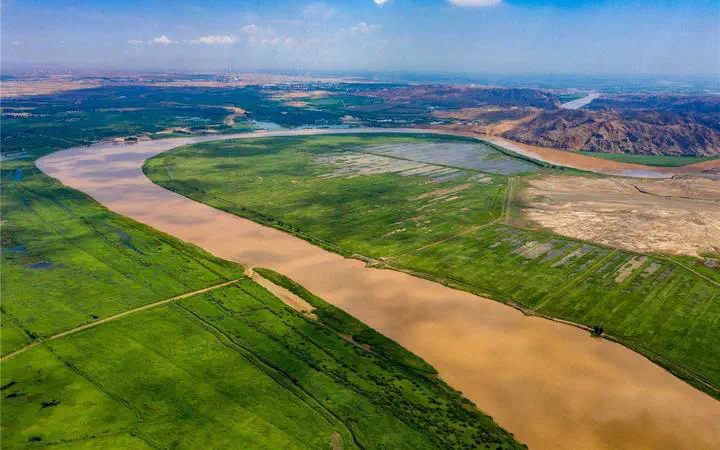 Photo by NXNEWS.NET
Background
Large river basins are dynamic socio-ecological systems in which hydrological processes and human activities continuously shape one another. Over recent decades, climate change, reservoir regulation, ecological restoration, and rapid socioeconomic development have fundamentally altered the natural water-sediment regime of many rivers. These changes have improved water security and ecosystem services in some regions while introducing new challenges related to environmental resilience, resource allocation, and long-term sustainability.
The Yellow River Basin provides a representative example of this transformation. Extensive engineering interventions, ecological conservation programs, and institutional reforms have substantially modified the interactions among runoff, sediment transport, and regional development. However, the responses of coupled human-water systems are often nonlinear, delayed, and characterized by complex feedback mechanisms that cannot be fully explained using conventional hydrological approaches alone.
This project integrates hydrology, socio-hydrology, complex systems science, and sustainability research to investigate how natural processes and human decisions co-evolve across spatial and temporal scales. By combining data analysis, system modeling, and interdisciplinary methods, the project seeks to improve our understanding of long-term river basin evolution and provide scientific support for adaptive watershed management.
Goals & Scientific Questions
This research aims to develop an integrated understanding of coupled human–water systems by quantifying the interactions between hydrological processes and socioeconomic dynamics under changing environmental conditions.
Key scientific questions include:
How do hydrological processes, sediment dynamics, and human activities interact across different spatial and temporal scales?
What feedback mechanisms drive the long-term co-evolution of natural and social systems in regulated river basins?
How do engineering infrastructure, policy interventions, and climate variability jointly influence the resilience and sustainability of river basin systems?
Can socio-hydrological models effectively capture nonlinear responses, lagged effects, and emergent system behaviors?
How can interdisciplinary modeling support adaptive water resources management and sustainable development in large river basins?
Acknowledgement
This project is funded by:
National Natural Science Foundation of China
Postgraduate Innovation Project of Ningxia University

Xianyuan Bao
A researcher specializing in Coupled Human-Water Systems and sustainable water management.